


Where to Access Your Disney Vacation Club Deed
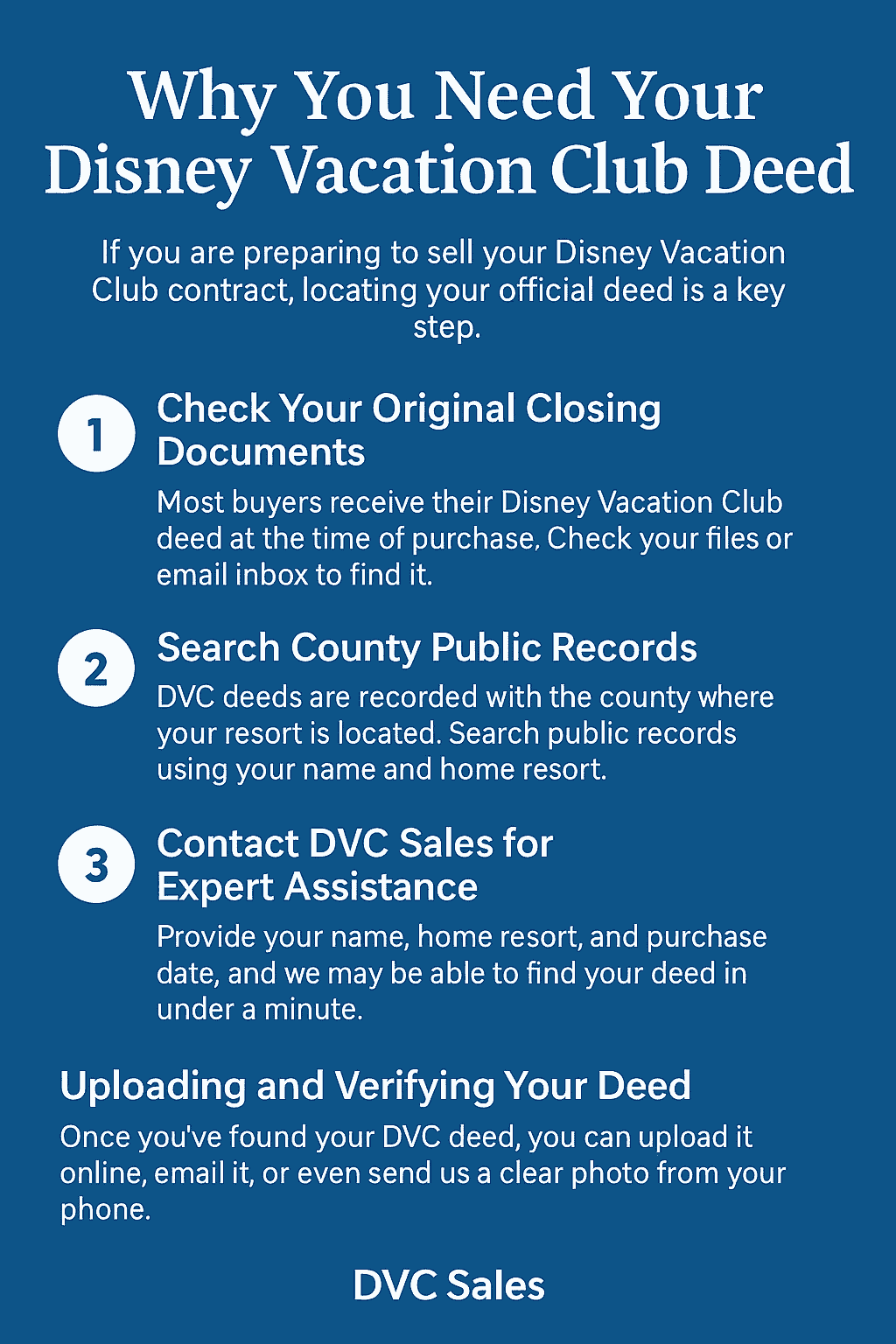
Your DVC deed is the legal document establishing your ownership interest in Disney Vacation Club. Understanding how to access this important document helps you manage your membership and provides documentation when needed for various purposes.
What Is Your DVC Deed?
A DVC deed is the recorded legal document that establishes your ownership rights in your Disney Vacation Club contract. Like any real estate deed, it identifies the property interest, names the owners, and was filed with the appropriate county recorder's office after your purchase closed.
The deed represents your legal claim to the points and membership rights associated with your contract. While you rarely need to reference it for routine membership activities, having access to this document is important for certain situations.
County Recorder's Office
DVC deeds are public records filed with county recorder offices. For most DVC resorts at Walt Disney World, deeds are recorded with the Orange County Comptroller's Office in Florida. Aulani deeds are recorded in Honolulu County, Hawaii, and Disneyland Hotel deeds in Orange County, California.
You can request certified copies of your deed from the appropriate county office. Many counties now offer online access to recorded documents, allowing you to search and download deed images from their websites. This provides convenient access without visiting government offices in person.
Original Closing Documents
When your DVC purchase closed, you received copies of the deed along with other closing documents. These papers were either mailed to you or provided through your title company's document delivery system. Check your files for these original documents.
If you purchased through resale, your title company should have provided deed copies after recording. Many title companies retain copies that can be requested even years after closing. Contact the company that handled your transaction if you need replacement copies.
Disney Vacation Club Member Services
While Disney does not maintain deed copies, member services can provide information confirming your ownership details including contract number, point allocation, home resort, and use year. This membership documentation serves many purposes even without a physical deed copy.
Member services can direct you to appropriate resources if you need deed documentation. They understand common member needs and can suggest the best approach for obtaining the specific documentation your situation requires.
Why You Might Need Your Deed
Several situations may require access to your deed. Selling your DVC contract requires deed documentation to transfer ownership. Refinancing your home may require documenting all real estate interests you own. Estate planning often involves listing deeded properties.
Some owners want deed copies simply for their records. Having organized documentation of significant purchases provides peace of mind and simplifies future transactions. Maintaining good records is worthwhile even without immediate need.
Online County Records Access
Most counties now provide online access to recorded documents. The Orange County Comptroller in Florida offers searchable databases where you can locate your deed using your name or other identifying information. Once located, deeds can typically be viewed and downloaded.
Online access is convenient but may require some patience navigating government websites. Search functions vary between counties, and document images may require specific software to view. Call the county office if you have difficulty locating your records online.
Requesting Certified Copies
If you need official certified copies rather than simple printouts, contact the county recorder's office directly. Certified copies bear official seals confirming their authenticity. Certain legal situations may require certified rather than ordinary copies.
Fees for certified copies vary by county but are typically modest. Processing time depends on the county's workload and whether you request copies by mail, in person, or through online ordering systems where available.
Organizing Your DVC Documents
Create a dedicated folder for your DVC documentation including your deed, closing statements, and membership correspondence. Store these documents securely where you can easily locate them when needed. Digital backups of important documents provide additional protection against loss.
Good organization now prevents frustration later when you need to access documentation. Taking time to establish proper record-keeping for your DVC ownership helps you manage this investment effectively throughout your years of membership.
Additional Tips for Managing Your DVC Deed
- Regular Updates: Regularly update your records to include any changes in ownership or additional purchases. This ensures all documentation reflects your current DVC status.
- Consult Professionals: If you have any legal or financial questions regarding your DVC deed, consult with a professional who specializes in real estate or vacation club ownership.
- Understand Your Rights: Familiarize yourself with the terms and conditions of your DVC membership to fully understand your rights and responsibilities as an owner.
Understanding and accessing your Disney Vacation Club deed is an essential part of managing your membership effectively. By keeping your documentation organized and knowing where to find your deed, you can ensure a smooth experience with your DVC ownership.

